USP 797: The Rulebook for Sterile Compounding
A pharmacy chapter about clean rooms and vial dates turns out to quietly run the tail end of a federal drug shortage.
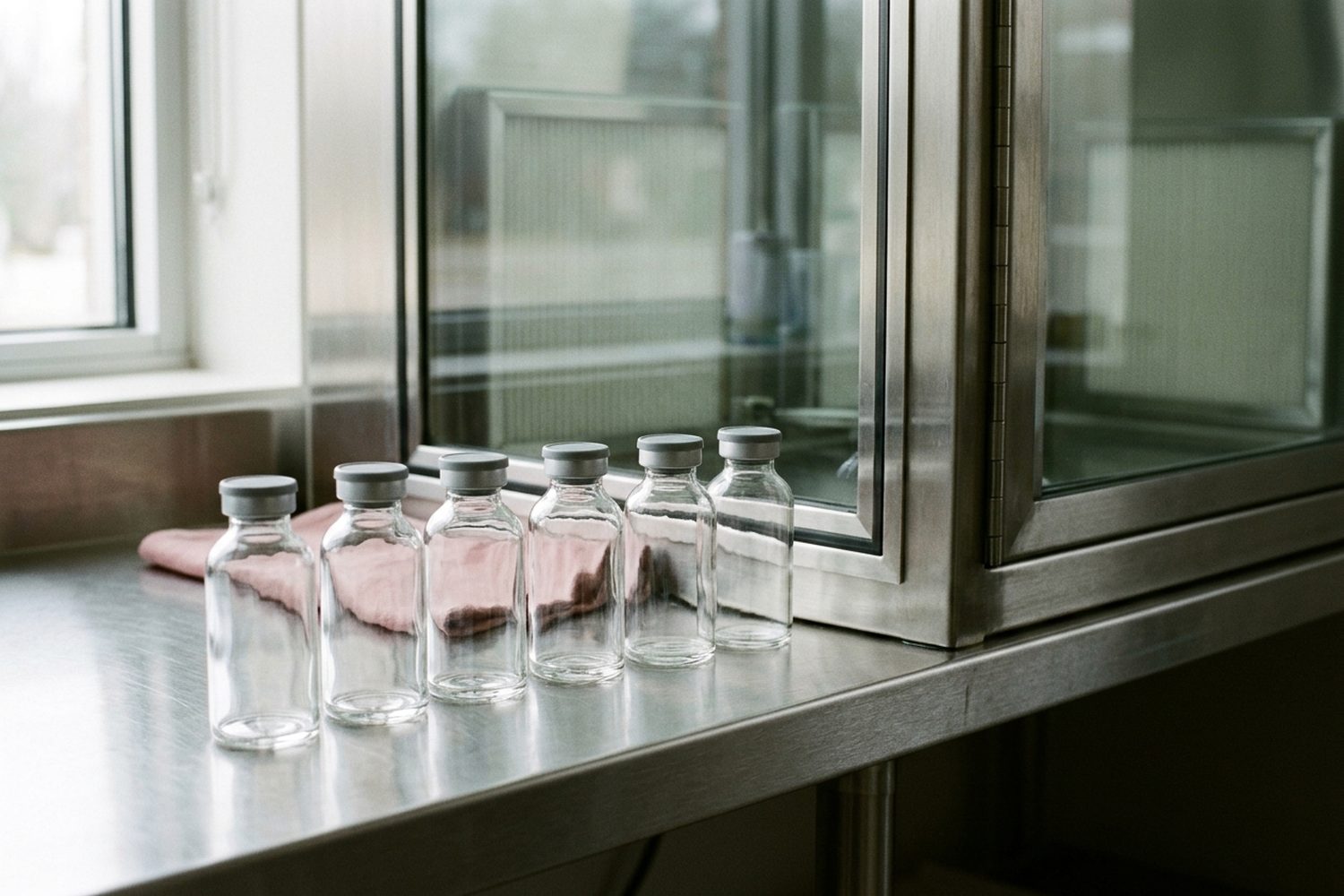
I spent part of this week reading the rules for how a pharmacy is supposed to make an injectable drug in a back room, and the strangest thing in them is a date. The rulebook is USP 797, a chapter of the United States Pharmacopeia that sets the standards for sterile compounding, and the date is the “beyond-use date,” the moment after which a vial of compounded medicine is supposed to stop being used. A great deal of the compounded GLP-1 story turns out to run through that date.
Here is the plain version. Pharmacies that compound for individual patients under section 503A “must comply with USP <795> and USP <797> along with state board of pharmacy regulations.” The revised versions of those chapters became final and enforceable on November 1, 2023. Outsourcing facilities under 503B answer to full federal CGMP rules on top of that, and the sterile chapters keep applying to them even while a drug is being wound down after a shortage. For an injectable, the standard covers clean rooms, how much drug the vial has to contain, and how long the vial is allowed to be a vial.
What USP 797 requires, starting with one syringe
Start small. A pharmacist makes one injection for one patient. That is the original 503A picture: compounding “according to prescriptions specific to particular patients,” dispensed for home use. You want three things from that injection. It should not have bacteria in it. It should contain about the amount of drug the label says. And it should get used before it goes bad.
The second one has a number. According to the Rx.com potency guide, “USP sets a minimum potency threshold of 90% of label strength for sterile injectables,” and the full range is 90% to 110%. So a vial labeled at some strength can be a tenth light or a tenth heavy and still pass (a tolerance roughly as generous as the one most people apply to a recipe). That is the rule.
The first one is the clean room, which is where the chapter’s paperwork lives. An FDA warning letter sent on September 18, 2026, to a Houston compounding pharmacy cited “inadequate smoke studies and rewritten media fill records” among its sterile compounding failures. (I will not pretend to explain the engineering of a smoke study from memory.) The point is that sterility is mostly proven with records, and records can be rewritten.
Beyond-use dates, or how long a vial gets to exist
The third thing is the date. The beyond-use date is basically an expiration date. Actually, that is not quite it. An expiration date sort of implies someone tested the product and found out when it degrades, while a 503A pharmacy may rely on default BUD categories set out in the chapter. The date can come from a chart rather than from the drug.
This is reasonable, from where the pharmacist stands. If you make one syringe for one person, running a stability study on that exact formulation is presumably not something anyone does, so a conservative default does the job. The patient wants the shot, the pharmacist wants a date that is defensible, and the chapter supplies one. Everyone is acting sensibly.
(I feel like every article I write eventually becomes an article about a date on a label, which says something about the job.)
What the 2023 revision changed, as far as the facts go
The revised USP <795>, <797> and <800> reached final enforceable status on November 1, 2023. That much is settled. The facts I have do not lay out clause by clause what the revision changed in the clean-room rules or the default dating tables, so I am not going to invent them. What is clear is that “enforceable” depends on who is enforcing.
Kentucky, for instance, began active enforcement of the revised chapters on January 1, 2026. That is a bit over two years after the standards became final. So in some places the 2023 rules were, for a while, the 2023 rules in the way a gym membership is a fitness plan.
States enforce the chapter through licensing, which is how it gets teeth. Washington and Ohio now require verifiable PCAB accreditation before a nonresident compounding pharmacy can get licensed there. Federal law adds its own layer: ingredients used in 503A compounding have to meet an applicable USP or NF monograph if one exists, plus “the USP chapter on pharmacy compounding.”
Scaling up to a batch, and then to a business
Now escalate. Instead of one syringe, the pharmacist makes twenty a day for twenty patients. Same rules. Fine.
Now it is hundreds a week, because a drug is short and demand is enormous (which is the usual way a small pharmacy finds out it is a large one). This happened. Compounders entered the GLP-1 market in 2022 when semaglutide and tirzepatide went on the FDA shortage list, and the shortage exception let them make copies they ordinarily could not. Each vial still needs its date. Each date can still come from the default table.
Now it is a large batch, made without patient-specific prescriptions, shipped to clinics for office use. That is a 503B outsourcing facility, and at this scale the FDA stops being comfortable with the chart. Its draft CGMP guidance expects beyond-use dates “to be supported by formulation-specific stability data, rather than the default BUD categories a 503A pharmacy may rely on.” Which is also sensible: a guess applied to one vial is a guess, but a guess applied to a whole batch is a business model.
The FDA’s view, presumably, is that if you are making stuff by the thousand you can afford to test it. The facility’s view is that it is following the rules for its category. Both are correct about their own category, which is the whole problem.
Then add ingredients. A 2025 survey of compounded GLP-1 products found 33 unique semaglutide and tirzepatide products, 48% of them combined with other things (cyanocobalamin, glycine, niacinamide, docusate, ondansetron, etc.). Every combination is a new formulation. Each one would need its own stability data to have a tested date. The same survey found that only 18% of products provided beyond-use-date information at all. So the date that the whole system relies on was, in most cases, not visible to the person holding the vial.
How far along the road we already are
Here is the absurd endpoint of the escalation. Suppose the shortage ends. The legal permission to compound copies disappears, but the vials already made do not. What decides when the old regime is finally over?
The date on the vial does. Consider this invented scene at a pharmacy counter: “Hey, the shortage ended in February, but this batch is good until its BUD, so technically we are still in the shortage until Thursday.” Sounds dumb. It is also, more or less, the rule.
The guide titled Compounding After a Drug Leaves the Shortage List says product compounded and dispensed before the enforcement deadline “can generally still be used through its assigned beyond-use date, but new compounding after the window closes is not permitted.” The FDA resolved the semaglutide injectable shortage on February 21, 2025, and gave 503A pharmacies until April 22 and 503B facilities until May 22 to stop compounding under the exception. After that, the tail of the shortage is measured in beyond-use dates, like the milk in your fridge outliving the grocery store that sold it.
And then there is the part of the market that skips the chapter entirely. Online stores selling “GLP-1 research solutions” not compounded in USP <797> clean rooms are frequently named in FDA warning letters. The boundary between a research solution and a weekly routine in the bathroom mirror is, let us say, blurry. Those products have no default category and no stability data. Lol.
So the escalation is not hypothetical. One syringe became batches, batches became combinations, combinations mostly lost their dates, and the date became the clock on the end of a federal shortage. The most durable piece of the semaglutide shortage, legally speaking, may have been a number a 503A pharmacist looked up in a default table and wrote on a label.
Sources
- Compounding After a Drug Leaves the Shortage List
- cGMP Expectations for Outsourcing Facilities
- Quality Control In Compounding Pharmacy: 2026 Checklist
- 21 U.S. Code § 353a - Pharmacy compounding | U.S. Code | US Law | LII / Legal Information Institute
- Compounded Tirzepatide Potency Guide | Rx.com
- 503A vs. 503B: A Quick-Guide to Compounding Pharmacy Designations & Regulations
- DEA Registration Requirements for Compounding Pharmacies
- Compounded GLP-1 Marketing After the Shortage Ended
- Semaglutide Salt Forms: Why the Base Matters
- The FDA Removes Semaglutide from the Drug Shortage List
- Compounded Semaglutide and Tirzepatide Products Use Unique Formulations but Efficacy and Safety Largely Unknown
- The Shot Heard ‘Round the Pharmacy’: FDA Takes Aim at GLP-1 Compounders | ArentFox Schiff
- Compounded GLP-1s: Why doctors worry and the FDA is cracking down
Compound GLP explains the law and published research. It is not medical or legal advice, and it never recommends a dose, a pharmacy or a product. Talk to a clinician before you start, stop or change any medicine.