The Semaglutide Shortage: How a Drug Gets on the List and Off It
For compounders, a shortage was never about empty shelves; it was a line on a federal web page, and the line was removed.
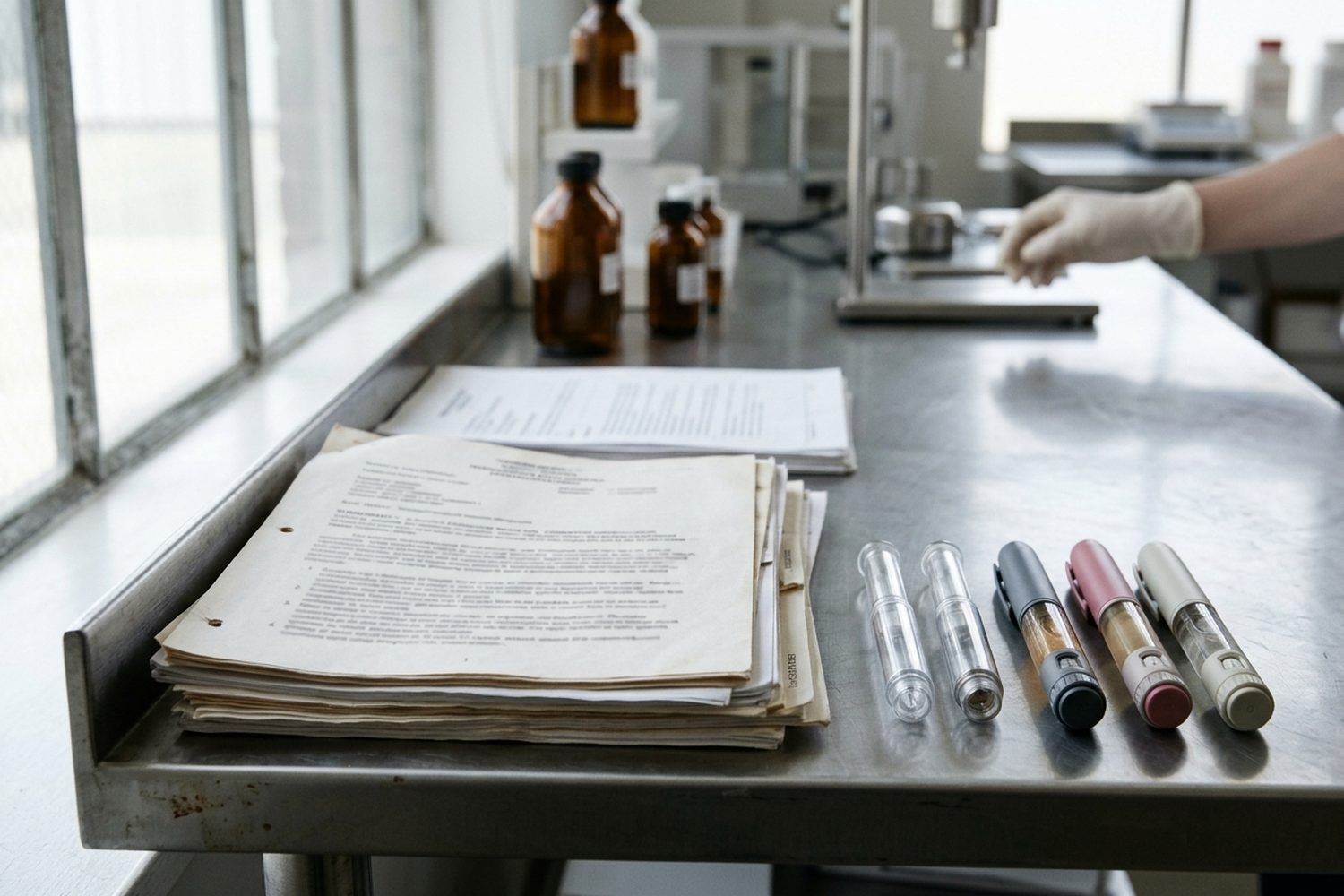
For about three years, whether an American pharmacy could legally make its own copy of a blockbuster weight-loss drug depended on whether that drug’s name appeared on a list kept by the Food and Drug Administration. Wegovy, which the FDA approved in June 2021, was added to the FDA drug shortage list on March 31, 2022, and Ozempic followed in August 2022. The semaglutide shortage, in the legal sense that mattered to compounders, ended on February 21, 2025, when the FDA issued a 13-page declaratory order determining that it had been resolved.
So the plain answer is that, officially, semaglutide injection products have not been in shortage since that order. Compounders got a wind-down: state-licensed 503A pharmacies had until April 22, 2025, and 503B outsourcing facilities had until May 22, 2025, to stop compounding under the shortage exception. A trade group sued three days after the order, and the U.S. Court of Appeals for the Fifth Circuit upheld the FDA’s removal of both semaglutide and tirzepatide, as reported in September 2026. That part is settled.
Why a list, and not the pharmacy shelf, decides who can compound
The sensible reaction to all this is that a shortage is a fact about the world. Either patients can fill their prescriptions or they can’t. It seems odd for the legality of an entire industry to hinge on a government web page rather than on whether the pens are actually at the pharmacy, and if you were designing the system from scratch you might well make it hinge on the pens.
To be fair to that objection, the law starts from something like it. Compounding a copy of an approved drug is ordinarily prohibited, but Sections 503A and 503B of the Food, Drug, and Cosmetic Act carve out an exception for drugs in shortage. And Legal 500 notes that “the FDA is required by statute to maintain an up-to-date list of drugs determined to be in shortage in the United States.” So there is a real-world fact, and there is a list meant to track it.
The strange part is which one the exception points to. It points to the list. Compounding a drug identical or nearly identical to an approved product is allowed only while that product appears on the FDA drug shortage list at the time of compounding, distribution, and dispensing (three separate moments, each of which has to check out). Not while it is hard to find, or while patients are complaining. While it is listed.
You and I would use “shortage” to mean you went to the pharmacy and they didn’t have it. The statute uses it more the way a parking sign uses “no parking”: the sign is the rule, whatever the traffic happens to be doing. The point is that, for legal purposes, the list is not evidence of the shortage. It is the shortage. (I write about finance, where the most consequential fact about a company is often which index it has been added to, so I find this extremely relaxing, which is probably a bad sign about my job.)
How semaglutide got on the list, and what that unlocked
Demand for semaglutide and tirzepatide outstripped supply in 2022, both drugs went on the list, and compounding pharmacies entered the market that year. The law firm ArentFox Schiff describes what grew from there as a “multibillion-dollar sub-industry.” (The “sub” is doing modest work in that phrase.)
The mechanics differ by type of compounder, which other pieces on this site cover. The short version for 503B outsourcing facilities is that they may compound large volumes of drugs from bulk drug substances without individual patient prescriptions, if the drug is on the shortage list at the time of compounding, distribution, and dispensing. That is a manufacturing business, more or less, switched on by a line of text on a federal website.
The Health Law Alliance, in an August 2026 article, puts the dependency bluntly: the shortage-list exception, “not any general right to compound popular medications,” is what permitted large-scale compounding of semaglutide and tirzepatide for several years. Popularity was the demand. The list was the permission.
The list also didn’t authorize everything done in its name. The FDA clarified that listing Wegovy and Ozempic did not authorize compounding semaglutide sodium or any other salt form (a separate mess, with its own article). And America’s Poison Centers notes that shortage-era compounded GLP-1s “are not reviewed by the FDA for safety or efficacy.” The list switched on legality. It did not switch on review.
How the semaglutide shortage ended: a declaratory order and a wind-down
Getting off the list works through a document. Per the same Health Law Alliance article, FDA shortage determinations are declaratory orders that identify “the specific drug, dosage form, and strength being removed from the shortage list, and take effect on the date issued.” In other words, the FDA writes down that the shortage is over. Then it is over.
Tirzepatide went first, by declaratory order on December 19, 2024 (one source gives October 2, 2024, and the records conflict on this). Semaglutide followed on February 21, 2025.
This is where “compounding, distribution, and dispensing” gets interesting, so here is a scenario, entirely made up. An outsourcing facility fills a batch of vials on a Thursday while semaglutide is listed. Friday morning the order issues. On a strict reading, the vials were lawfully compounded and can no longer be lawfully distributed, so a box on a truck somewhere in Ohio crosses from legal to not legal while stopped at a red light, and a pharmacist has to work out whether dispensing happens when the vial leaves the shelf or when it leaves her hand. Meanwhile a compliance officer is telling a colleague, “Okay, refresh the page. Still on there? Refresh it again.”
The FDA did not make anyone litigate the red light. It used enforcement discretion to give 503A pharmacies a 60-day wind-down, to April 22, 2025, and 503B facilities until May 22, 2025. I mean, it’s fine. It is what a reasonable regulator would do; it is just notable that the reasonable thing had to arrive as a grace period layered on a rule that, read literally, contains no grace at all.
After the window, by one account, a 503B could use bulk semaglutide only if it appeared on the FDA’s bulk substances list or the shortage list, and at the time that account was written semaglutide was on neither. Whether that has changed is not something these sources settle.
Why the compounders sued, and what the Fifth Circuit said
On February 24, 2025, three days after the order, the Outsourcing Facilities Association sued the FDA in Fort Worth, Texas. It had already brought a similar case over tirzepatide. The argument was about procedure: the challengers said the FDA should have used notice-and-comment rulemaking before taking the drugs off the list.
Why fight about procedure instead of pens? Because the objection at the top of this piece cuts both ways. If the list merely recorded a fact, you would fight about the fact. But if the list is the legal switch, the interesting question becomes who gets to flip it and how much ceremony comes first. Notice-and-comment takes time, and for instance a few extra months of listing would be a few extra months for a business that otherwise had a deadline.
I assume the association’s devotion to the finer points of administrative procedure is deep and long-standing, and that its urgency landing on the same week a multibillion-dollar business received a wind-down date is the sort of coincidence administrative law produces all the time.
Anyway, it didn’t work. The Fifth Circuit upheld the FDA’s determinations on both drugs, as reported in September 2026. The agency can declare a shortage over, by order, and it is over.
Why a drug can be available and still on the list
The gap between the list and the shelf runs in the other direction too. As of February 2025, according to Foley & Lardner, dulaglutide was still on the shortage list even though its manufacturer reported all presentations were available. Liraglutide was still listed as well, with two presentations reported available and three with limited availability.
On the other hand, this is just what happens when a fact about the world becomes a legal status by way of a document: the status changes when the document changes, not when the pens show up (or stop showing up). Whatever was happening at pharmacies in the weeks before, semaglutide’s legal shortage ended on February 21, 2025, because that is the day the order was issued.
So in February 2025, by the only definition the statute cares about, the scarcest thing about dulaglutide was the paperwork saying there was plenty of it.
Sources
- The Shot Heard ‘Round the Pharmacy’: FDA Takes Aim at GLP-1 Compounders | ArentFox Schiff
- Semaglutide Salt Forms: Why the Base Matters
- Compounded GLP-1s: Why doctors worry and the FDA is cracking down
- Fifth Circuit Upholds FDA on GLP-1 Shortage Decisions
- Compounding After a Drug Leaves the Shortage List
- GLP-1 Drugs: FDA Removes Semaglutide from the Drug Shortage List | Foley & Lardner
- FDA's Semaglutide Shortage Resolution: Legal Implications And Risks For Compounding Pharmacies | Legal 500
- Resolution of Shortages of Semaglutide Injection Products ...
- The FDA Removes Semaglutide from the Drug Shortage List
- Tirzepatide Shortage Resolved: What It Means for Your Weight Loss Journey | Innovative Care
- FDA clarifies position on compounding semaglutide sodium
- Semaglutide Compounding Pharmacy: What's Legal In 2026
- The Semaglutide Shortage Is Ending: What’s Next For Compounded Drugs?
- Semaglutide Cost San Antonio: Compounded vs Brand – Dr. Rogers Centers
- America's Poison Centers - GLP-1
- Compounded Semaglutide Dosage Chart: Titration Guide
Compound GLP explains the law and published research. It is not medical or legal advice, and it never recommends a dose, a pharmacy or a product. Talk to a clinician before you start, stop or change any medicine.